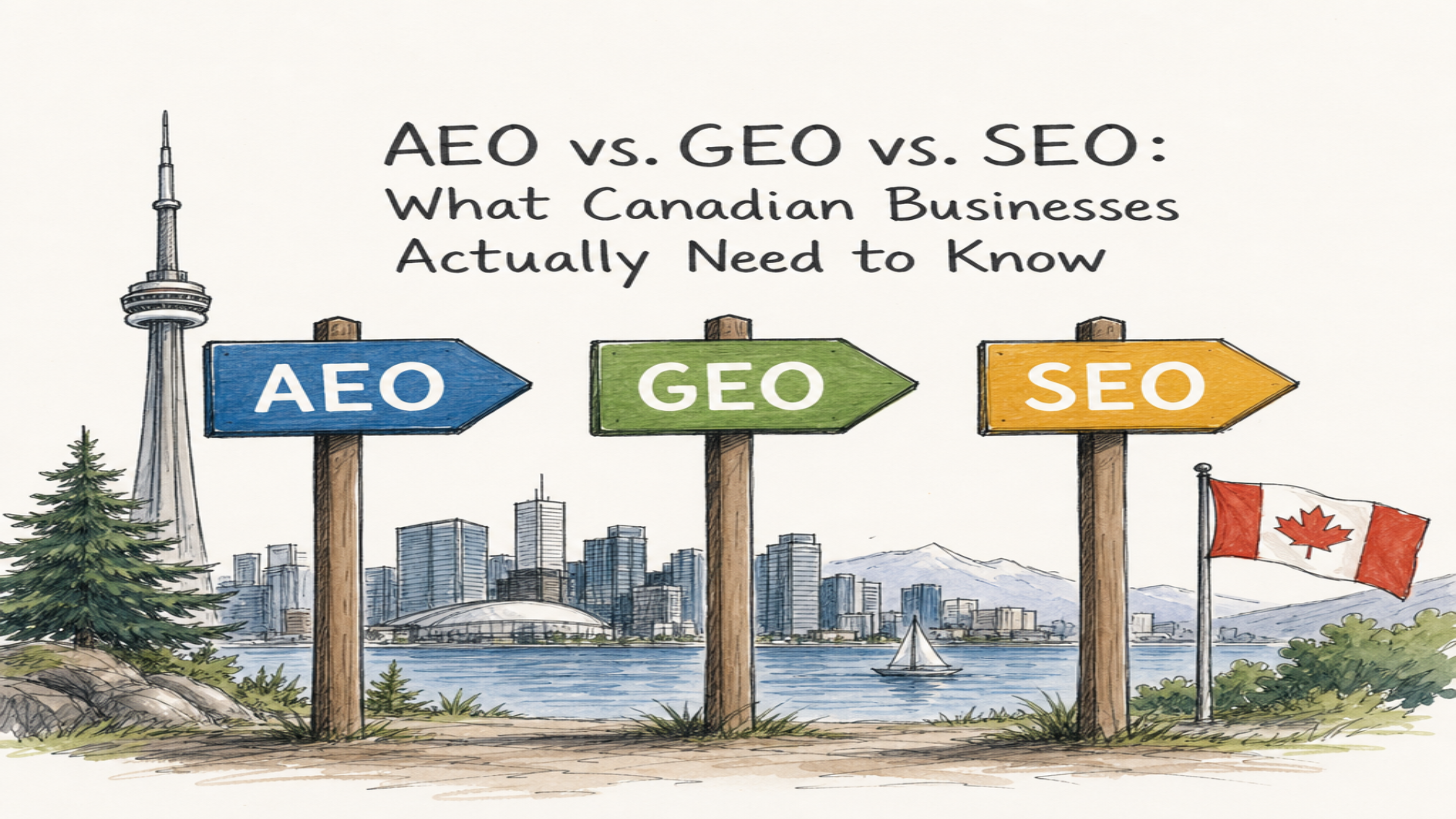


Search is becoming less about typing a few keywords into Google and more about asking complete questions. Instead of searching for “best accounting firm Toronto,” someone might ask, “What should I look for when choosing an accounting firm in Toronto for a small business?” That small change reflects a bigger shift in how people find information online.
Google’s AI Overviews can provide an AI-generated summary with links to supporting web content, while AI Mode lets users ask follow-up questions and handle more complex searches. AI Mode can also break a question into related subtopics and search for information across multiple sources.
For Canadian businesses, this means the way people search is changing, and your content needs to keep up.
From Keywords to Conversations
Traditional searches often start with short phrases. AI-powered search encourages longer, more natural questions.
That changes what someone may type when looking for a product, service, or solution. Instead of entering a few keywords, a potential customer can describe a situation, add specific requirements, and ask for comparisons in one prompt.
For example, a homeowner might search:
- “How much does a heat pump cost in Ontario?”
- “Which type of heat pump works best for a two-storey home?”
- “What should I check before replacing my current system?”
These searches reveal more about intent. They also give businesses a better idea of the questions their content should answer.
Search is Becoming More Conversational
AI Mode takes this further by allowing follow-up questions. Someone can start with a broad question, ask for clarification, then request a comparison without starting a completely new search.
The search journey can look more like:
Question → follow-up → comparison → decision
Content needs to support that journey. A single page that answers only one narrow question may not be enough. Stronger content anticipates related concerns and provides useful context without becoming repetitive.
This is where clear headings, logical sections, and straightforward explanations become especially valuable.
What This Means for Your Content
You don’t need to abandon keywords. Instead, think beyond the keyword and focus on the intent behind it.
When planning content, ask:
- What problem is the customer trying to solve?
- What questions are likely to come next?
- What information would help someone compare options?
- What details could prevent confusion or hesitation?
Then build content around those needs.
A service page, for example, should do more than list what you offer. Explain who the service suits, what the process involves, and what questions customers may have. This approach can strengthen your search engine optimization because you’re creating information around real customer needs rather than simply filling pages with keywords.
Trust Still Matters
More conversational searches don’t mean quality standards have disappeared. Google says AI features rely on its existing Search systems and relevant web content, which means accuracy and helpful information still matter.
That makes current information, clear explanations, and genuine expertise increasingly important. If your website provides useful answers and supports them with credible information, you’re giving customers and search platforms a stronger reason to trust your content.
Write for the Way People Search
Search behaviour is becoming more conversational, detailed, and intent-driven. That means your website should provide clear answers, useful context, and information that supports the questions customers may have along the way. When your content matches those needs, you have a better chance of staying relevant as search continues to change.
We at Bluedot Marketing help businesses adjust their digital presence to changing search habits through conversion focussed web design, SEO, and thoughtful content. If you’re ready to make your website more useful for the way customers search today, reach out to us today and let’s build a strategy around real search intent.
As search becomes more conversational and AI-driven, businesses need to optimize for more than traditional keywords. Explore our GEO services to learn how we help Canadian businesses improve their visibility across AI-powered search platforms.