
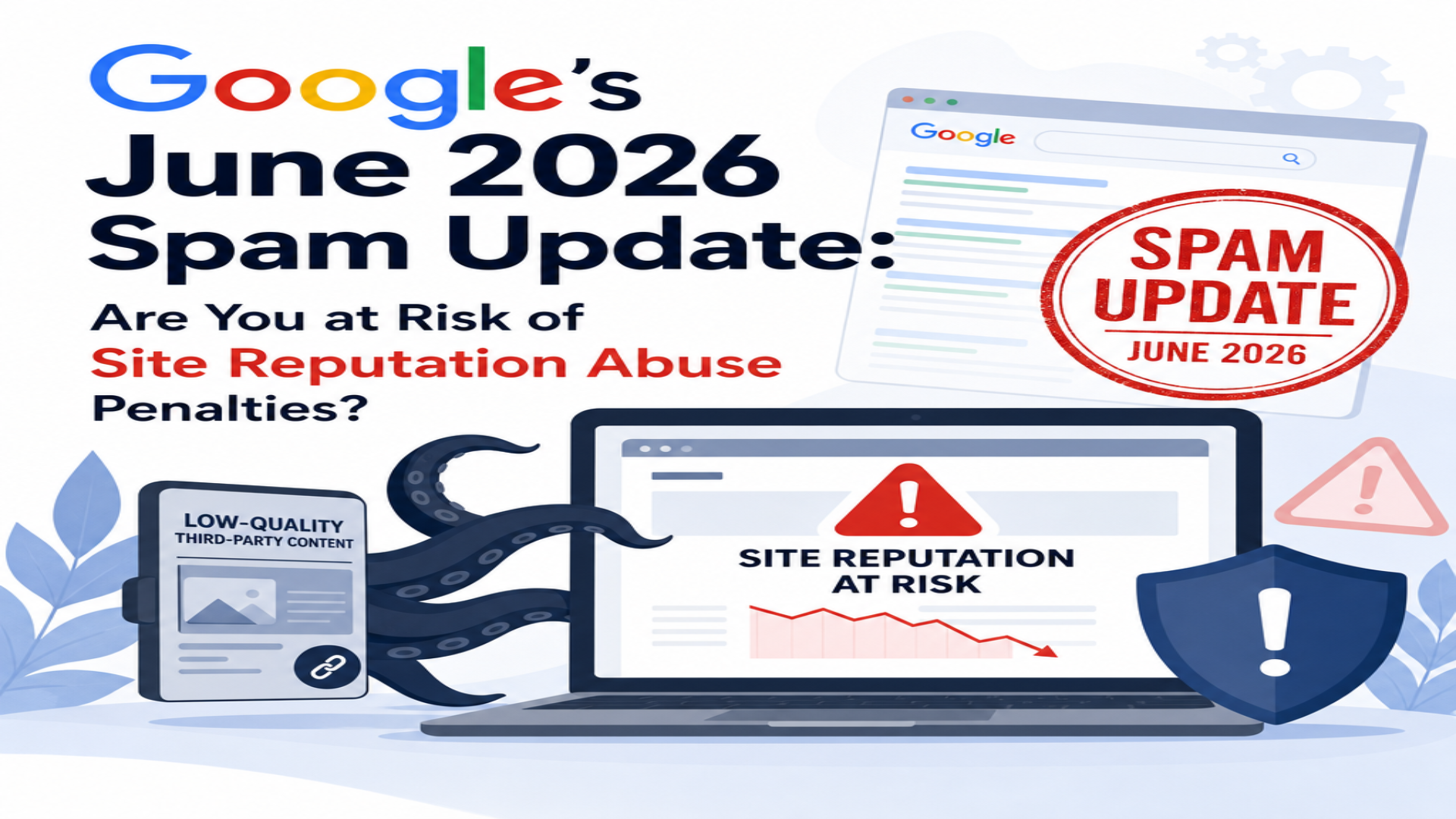
Google continues to refine its search results to reward helpful, trustworthy content. As part of that effort, the June 2026 spam update reinforces Google’s focus on site reputation abuse, a practice that can put websites at risk of losing visibility in search results. If your website includes sponsored content, guest articles, or third-party pages, now is the right time to review how that content is managed.
The good news is that staying compliant doesn’t require complicated changes. A well-maintained website with valuable, relevant content is still the best long-term approach. At Bluedot Marketing, we help businesses build strong online foundations through AI-powered marketing, SEO services, and quality content that supports lasting growth.
What Is Site Reputation Abuse?
Site reputation abuse occurs when third-party content is published on an established website mainly to benefit from that website’s ranking authority. While publishing content from outside contributors isn’t automatically against Google’s rules, problems arise when those pages exist primarily to manipulate search rankings instead of helping visitors.
For example, a business website may host unrelated articles, affiliate pages, or sponsored content that has little connection to its products or services. If those pages are designed mainly to gain search traffic, Google may treat them as spam and apply manual actions that reduce visibility in search results.
The goal isn’t to discourage partnerships or guest contributions. Instead, Google wants websites to maintain editorial oversight and ensure every page provides genuine value.
Signs Your Website Could Be at Risk
A quick content review can help identify potential issues before they affect rankings. Consider reviewing your website if you notice any of the following:
- Pages that don’t relate to your business or industry
- Guest articles with little editorial review
- Affiliate or sponsored content created only to rank in Google
- Older pages that no longer provide useful information
- Content written for search engines rather than real readers
Every page should have a clear purpose. If a page wouldn’t benefit your audience without search traffic, it may be worth updating, improving, or removing altogether.
Focus on Quality Instead of Shortcuts
Many businesses feel pressure to publish more content, but quantity alone doesn’t improve rankings. Google’s latest guidance continues to reward websites that consistently publish relevant, well-organized information.
A stronger strategy is to build content around your products, services, and customer questions. Pairing helpful articles with a well-structured website creates a better experience for visitors while making it easier for search engines to understand what your business offers.
Regular content audits also make a difference. Reviewing older pages, updating outdated information, and removing low-value content help keep your website focused and trustworthy over time. Combining these efforts with professional web design and development and content writing creates a stronger online presence that supports sustainable SEO performance.
Stay Ahead of Future Updates
Google’s algorithms will continue to change, but one principle remains consistent: websites that put people first are more likely to perform well over time. Rather than looking for quick ranking wins, focus on creating useful content that reflects your expertise and supports your business goals.
If you’re unsure whether your current website follows Google’s latest best practices, Bluedot Marketing can help. From SEO support and content strategy to website improvements, our team can help strengthen your online presence while keeping your site aligned with Google’s evolving guidelines. Contact us today to build a website that’s prepared for whatever comes next.